 Skip-the-line available
 The Best Time to Visit Château de Chambord
A month-by-month guide to crowds, the deer rut, light and the seasons at the Loire Valley's largest château.
Chambord rewards good timing more than most monuments, because it is two attractions in one — a Renaissance château and a 52.5-square-kilometre walled hunting park — and each peaks in a different season. The château's open-dated ticket means you are free to choose your day, so the only question is which combination of month, weekday and time delivers the version of Chambord you want: empty roof terraces, the autumn deer rut, the formal gardens in bloom, or the bare-winter silhouette reflected in a still canal. This guide breaks down the calendar, the weekly rhythm of crowds, the wildlife seasons in the park, and the best times of day to arrive.
Month-by-Month: What Each Season Looks Like
Winter (December to February) is the quietest season at Chambord. Visitor numbers are low, the keep and staircase can be near-empty on a weekday, and the bare park frames the silhouette starkly — on a frosty morning the château reflected in a still canal is one of the great Loire images. Hours are shorter, closing around 17:00, and three dates are closed entirely: 1 January, the last Monday in November, and 25 December. Spring (March to May) brings longer days, the formal gardens waking up, and rising but still manageable weekend numbers; the park is at its greenest and the light is excellent for photography.
Summer (June to August) is the busiest and hottest period, with the heaviest crowds between 11:00 and 15:00 and the broadest day-tripper traffic from Paris, Tours and Blois. June is the most rewarding of the three with long daylight and gardens in full display; July and August are best handled by arriving at opening or late afternoon. Autumn (September to November) is arguably the connoisseur's season: mild weather, thinning crowds from mid-September, autumn colour spreading through the park, and — most distinctively — the red deer rut in late September and October, when stags bellow across the reserve at dawn and dusk.
The Weekly Rhythm and Best Times of Day
Weekends and French school holidays are the busiest, drawing regional families alongside international visitors on weekend rental cars. Wednesdays and Thursdays outside school holidays are the calmest days; Saturdays the busiest. Because the ticket is open-dated, you can simply pick a quieter weekday rather than booking a specific slot — a genuine advantage Chambord has over timed-entry monuments. French school-holiday weeks (the February and April rotating zones, July–August, and the Christmas window) raise numbers across the board and are worth checking against the official calendar before you choose a day.
Within any day, the pattern is consistent: arrive at opening (around 09:00) or in the last two hours before close for the calmest experience. The midday window of 11:00 to 15:00 in summer is when coach groups and lunchtime arrivals stack up, and the double-helix staircase and roof terraces — the two unmissable spaces — are far better with room to move. An early start also means cooler air on the exposed terraces in summer and the best chance of low, raking light across the roofscape. Late afternoon works well too, as day groups depart and the light turns gold on the white tuffeau stone.
Wildlife and the Autumn Deer Rut
Chambord's walled park is a genuine wildlife reserve, home to red deer and wild boar that roam freely across 52.5 square kilometres of forest and meadow. For most of the year they are most reliably seen at dawn and dusk from the raised observation hides positioned along the park trails, when the animals move out to feed in the open. The estate runs guided wildlife outings — on foot, by 4×4 or by electric cart — for visitors who want a better chance of close sightings, and binoculars are well worth bringing in any season.
The highlight of the wildlife calendar is the brame du cerf — the red deer rut — in late September and October. For a few weeks the stags bellow across the reserve, especially at dawn and dusk, as they compete for hinds, and the sound carrying over the misty park at first light is unforgettable. The estate runs special early-morning and evening rut-listening sessions during this period, which book up quickly. If wildlife is a priority, plan your open-date visit for late September or October and stay locally so you can be in the park at first light.
Gardens, Park and the Outdoor Seasons
The 6.5-hectare formal French gardens on the north and east façades, re-created in 2017 from the 18th-century design, follow a clear seasonal rhythm: structural box and gravel geometry year-round, with lawns and plantings at their freshest from May through September. They are free to walk with your ticket and offer the best ground-level vantage point for taking in the château's full symmetry and roofscape from a little distance. Spring and early summer are the gardens' strongest months; autumn adds colour to the surrounding park rather than to the formal parterres themselves.
Beyond the gardens, the park is an all-season outdoor space with a different best-time for each activity. Bike hire, rowing boats on the canals and electric carts run mainly from spring through autumn; the canals are at their most photogenic in still morning light with the château reflected in the water. Walking and cycling the avenues is pleasant in any dry weather, and even winter has its appeal for the bare-tree views and the chance of frost or mist. If you want the full Chambord — château plus a real exploration of the park — give yourself a dry day from April to October and allow a full day rather than a morning.
Light, Photography and the Roofscape
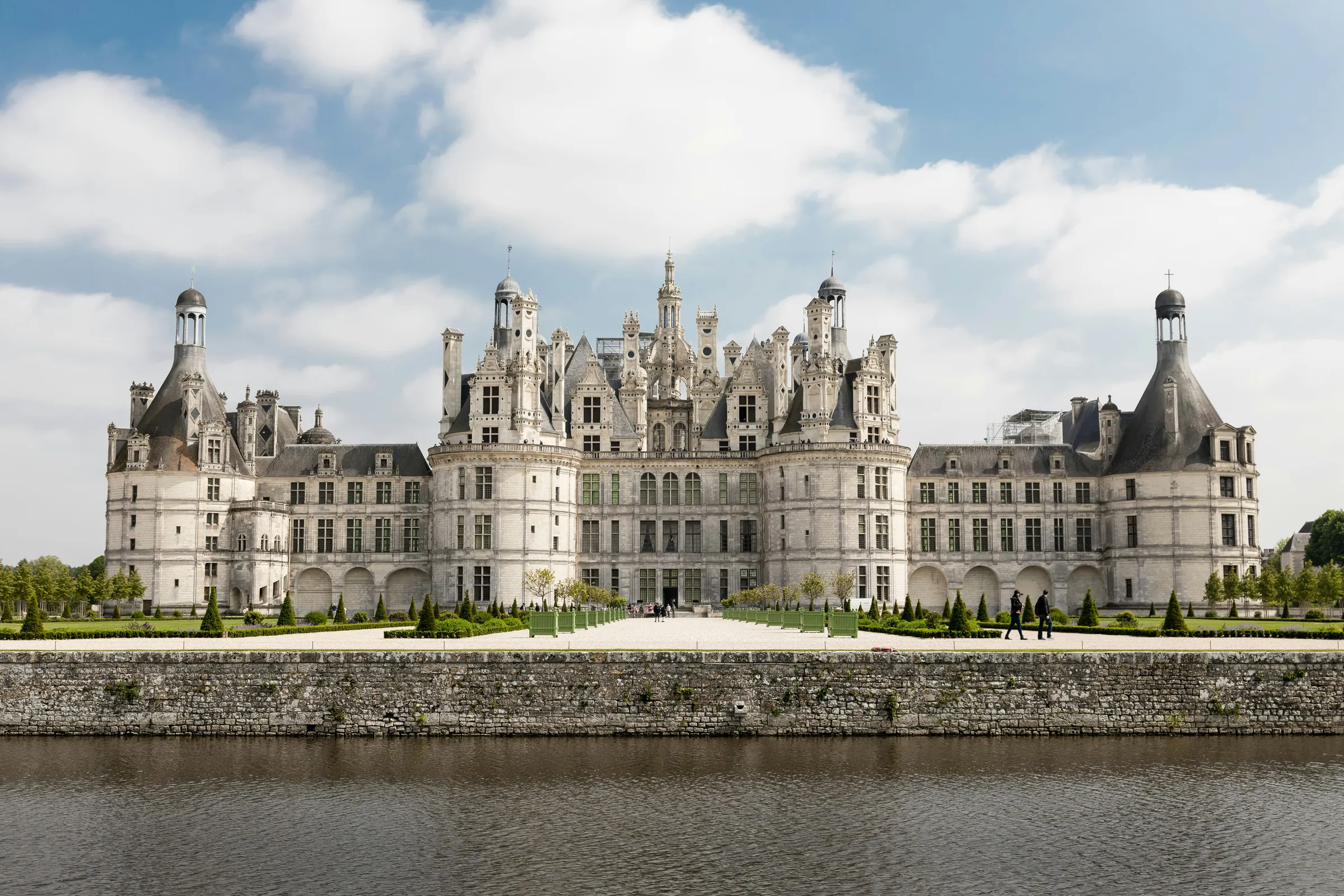
The classic exterior photograph of Chambord is taken from across the north canal, looking back at the symmetrical façade and its roofline of turrets and chimneys reflected in the water. This view is at its best in the soft light of early morning, when the canal is stillest and the white stone catches warm low light, and again in the golden hour before close. Midday summer sun flattens the roofscape and the canal is busier; dawn and dusk give the building depth and the reflection its mirror quality. In winter the low sun stays kind all day, and frost or mist on the canal can produce the most atmospheric images of the year.
Inside, photography is permitted without flash or tripod throughout the keep. The double-helix staircase rewards shooting upward through the hollow core toward the lantern tower, where the light pours down — strongest around midday when the sun is high enough to reach the core. The roof terraces are the other great photographic space: shoot among the chimneys and turrets in low side-light for the strongest texture, and use the terrace vantage for sweeping views over the gardens and park. An open-date ticket lets you choose a day with clear light, which matters more at Chambord than at most interiors-focused châteaux.
Frequently asked
What is the best month to visit Chambord?
May, June and September give the best balance of weather, daylight and manageable crowds. Late September and October add the red deer rut in the park. July and August are warmest but busiest; winter is quietest and most atmospheric.
When is the deer rut at Chambord?
Late September and October. Stags bellow across the walled park at dawn and dusk, and the estate runs special early-morning and evening rut sessions during this period — they book up quickly.
Which days are quietest?
Wednesdays and Thursdays outside French school holidays. Saturdays and holiday weeks are busiest. Because the ticket is open-dated, you can simply choose a quieter weekday.
What time should I arrive to avoid crowds?
Arrive at opening (around 09:00) or in the last two hours before close. The midday window of 11:00–15:00 in summer is the busiest, especially on the staircase and roof terraces.
Is Chambord open in winter?
Yes, with shorter hours (closing around 17:00). It is closed only on 1 January, the last Monday in November, and 25 December. Winter is the quietest and one of the most atmospheric times to visit.
Are the gardens worth seeing?
Yes — the 6.5-hectare formal French gardens, re-created in 2017, are free with your ticket and offer the best ground-level view of the château's full symmetry. They are freshest from May to September.
How long should I plan for a visit?
Allow 2.5 to 3 hours for the keep, staircase and roof terraces, plus 1 to 2 hours for the park and gardens. A full day is easy to fill, especially if you cycle or boat in the park.
Does the open-date ticket let me pick any day?
Yes. Chambord's standard ticket is open admission with no fixed time slot, so you choose your own day and arrive during opening hours. That makes timing your visit around weather and crowds simple.